
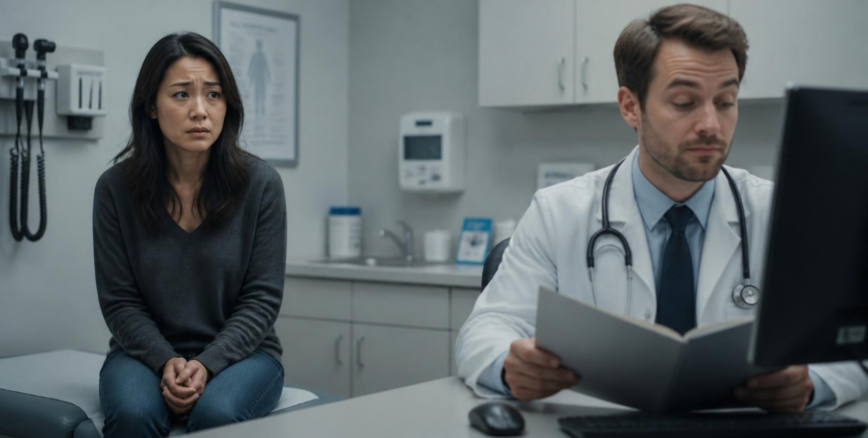
Doctors dismiss perimenopause symptoms as stress or aging more often than most women realize, and it happens in a very specific, very common way. A woman asks a simple question: why don’t I feel like myself anymore? Instead of a real answer, she gets a shrug. It’s probably just stress. Welcome to getting older.
If this has happened to you, there’s a real, documented reason behind it. It isn’t personal, and it isn’t random. The pattern of doctors dismissing symptoms this way traces back to something structural, not something wrong with you or with the doctor sitting across from you.
Why Doctors Dismiss Perimenopause Symptoms as Stress
Most obstetricians and gynecologists in the United States finish residency without any formal menopause education. This training gap explains a great deal about why doctors dismiss perimenopause symptoms instead of investigating them properly.
A 2023 needs-assessment survey of ninety-nine U.S. OB/GYN residency program directors, published in the peer-reviewed journal Menopause, found something striking. While 92.9 percent of directors agreed that residents nationwide needed access to a standardized menopause curriculum, only 31.3 percent of programs actually had one in place.
Other research on this same gap paints an even starker picture. As few as seven percent of OB/GYN residents feel adequately prepared to manage menopause patients. Roughly one in five graduating residents report receiving no menopause education at all during their entire training.
What It Means When Your Symptoms Get Dismissed
A doctor reaching for stress or aging instead of your hormones may genuinely be doing her best with training that never covered this transition. That doesn’t make the dismissal easier to sit with. However, it does change where to direct your frustration, and more importantly, it changes what to do next. Doctors dismiss perimenopause symptoms far less often once they’ve had specific training in this transition, which is exactly why the practitioner you choose next matters.
Rather than accepting the dismissal as the final word, consider seeking a practitioner with specific menopause training. A NAMS-certified menopause practitioner, for example, has pursued education beyond a standard residency specifically to close this gap.
The Real Cost of the Wrong Answer
Every year spent treating a hormonal shift as a stress or mental health issue alone is a year spent managing the wrong problem. This doesn’t mean abandoning mental health support, which can be genuinely valuable alongside the right physical care. Instead, it means making sure the physical piece isn’t being skipped entirely.
This pattern of doctors dismissing perimenopause symptoms rarely comes from indifference. It comes from a system that never equipped its own physicians to recognize what they were looking at. Knowing that doesn’t undo a frustrating appointment, but it does mean the next one doesn’t have to go the same way.
If you’re also noticing symptoms beyond fatigue and mood, joint pain, a racing heart at night, or brain fog, it’s worth reading the fuller symptom list perimenopause can bring, since hot flashes are only one small part of a much longer picture: Menopause Is Not Just Hot Flashes.
What to Bring to Your Next Appointment
Because doctors dismiss perimenopause symptoms partly due to vague descriptions, specificity helps enormously. Bring a written symptom list instead of a general feeling. Note dates and patterns rather than just “lately.” And ask the direct question: could this be hormonal?
That one question, asked plainly, changes the entire conversation. It moves the appointment from a guess about your mood to a real conversation about your hormones, which was the right conversation to have from the start.
Sources
- “Needs assessment of menopause education in United States obstetrics and gynecology residency training programs,” Menopause, 2023, PubMed: https://pubmed.ncbi.nlm.nih.gov/37738034/